OPINION
The 50/30/20 Rule Is Outdated. Here's What Actually Works in 2026.
The Rule Everyone Quotes, Nobody Follows
You've heard it a hundred times: spend 50% on needs, 30% on wants, 20% on savings. Simple, clean, quotable.
There's just one problem: it doesn't work for most people in 2026.
Rent in most major cities now eats 40–50% of take-home pay on its own. Groceries are up 25% from 2020. Student loans have returned. The "needs" bucket is overflowing before you've bought a single "want."
The 50/30/20 rule was designed for a world where housing was cheap, income was stable, and one salary could cover a household. That world is largely gone.
So what replaces it?
The Problem With Fixed Percentage Rules
All percentage-based rules share the same flaw: they assume your expenses are proportional to your income. They're not.
If you earn $40,000/year, rent might eat 45% of your income. If you earn $120,000/year, rent might eat 15%. The percentages mean completely different things.
Worse, fixed rules don't account for time. Your financial reality in March (tax refund, no big trips) looks nothing like June (vacation, car registration, summer activities). A static percentage framework misses all of that.
A Better Framework: The Zero-Based Calendar Budget
Here's what actually works:
1. Start with your exact take-home income
Not gross, not estimated — your actual monthly deposit after taxes and deductions.
2. List every fixed commitment first
Rent/mortgage, car, insurance, subscriptions, minimum debt payments. These are non-negotiable. Subtract them.
3. Allocate to goals next — not last
Most frameworks treat savings as what's left over. Flip it: decide your savings/investment number upfront and treat it like a bill. What's left is your discretionary budget.
4. Distribute discretionary spending by week, not month
Take your remaining budget and divide it across the weeks of the month based on what's actually happening. Big week planned? Allocate more. Quiet week at home? Allocate less.
5. Review weekly, not monthly
Monthly reviews are too late to course-correct. A 5-minute weekly check-in catches overspending before it compounds.
How Blueprint Implements This
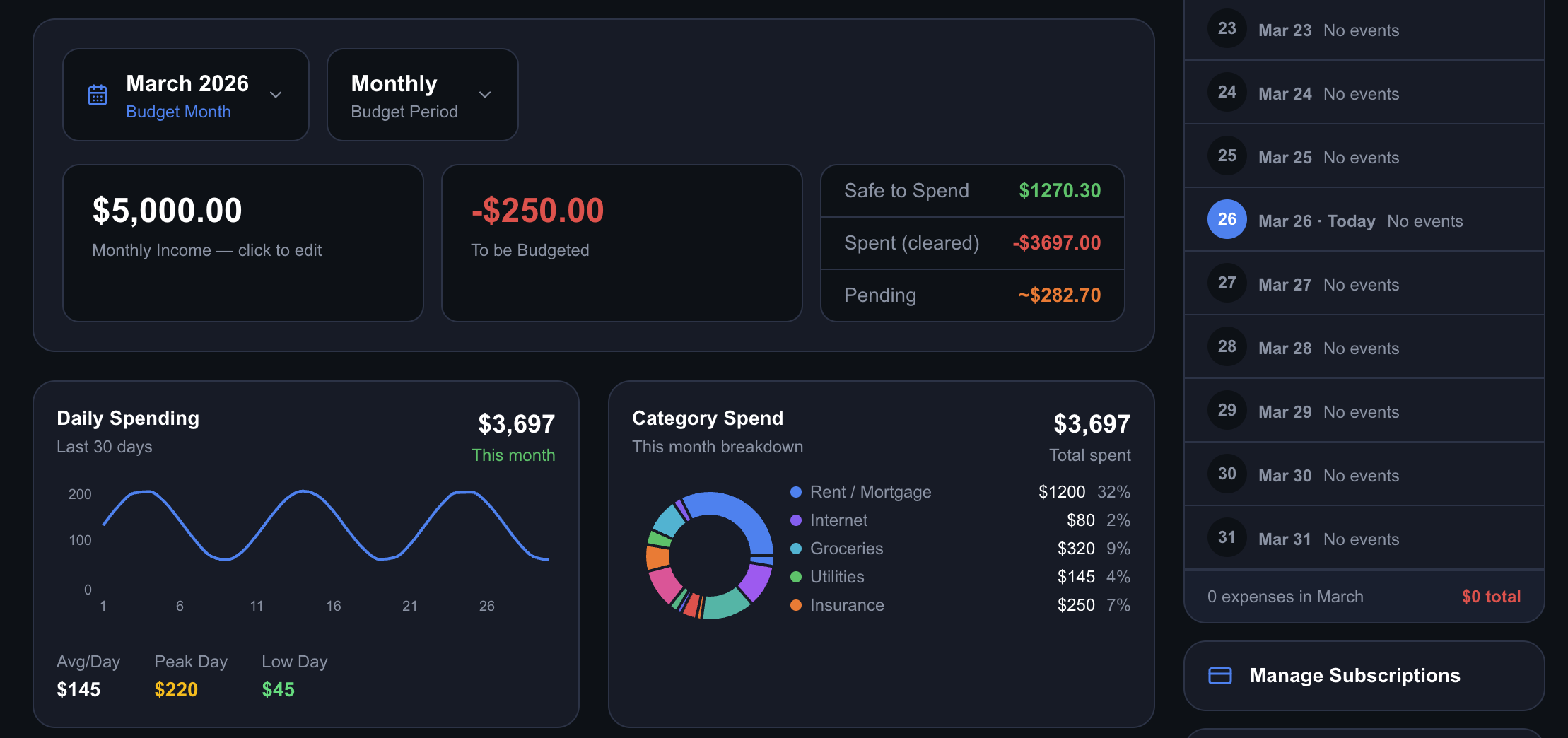
Blueprint's budget system is built around this exact framework. When you set up your account, you start with income, then layer in fixed obligations, then goals, then variable spending.
The goals section is deliberately placed alongside your budget — not as an afterthought. Every month Blueprint shows you exactly how much you're contributing to each goal automatically.
And because Blueprint connects to your calendar, it adjusts your weekly view based on what's actually happening — not a generic average.
The Honest Truth About Budgeting Rules
No rule works if you don't have visibility. The 50/30/20 rule, zero-based budgeting, the envelope method — they're all frameworks that require you to actually know what's going on with your money.
The reason most people fail at budgeting isn't the wrong framework. It's the wrong tools. Spreadsheets are too manual. Generic apps don't know your life. And no one has time to reconcile transactions every night.
Blueprint automates the visibility part — so whatever framework you prefer, you actually have the data to use it.
Try Blueprint free for 30 days.
TRY BLUEPRINT FREE
Your budget, your calendar, your goals — unified.
30-day free trial. Connect your bank and calendar in under 10 minutes.
Start Free Trial